

10 best ecommerce CRO agencies to consider in 2026
Compare 10 ecommerce CRO agencies across services, pricing, ideal clients, and case studies to find the right fit for your conversion optimization needs.
For an ecommerce brand, CRO gets more complicated as it grows. More traffic, products, and customer journeys create more opportunities for shoppers to drop off and more variables to consider when deciding what to test.
A conversion rate optimization agency can provide the research, testing, design, and development expertise needed to identify these opportunities and test changes to the buying experience.
The challenge is finding an agency that fits your specific needs. Some specialize in landing pages and paid traffic, while others offer broader CRO, Shopify development, UX, or ongoing testing.
We’ve compared 10 ecommerce CRO agencies across their services, ideal client profiles, pricing, and available case studies to help you narrow down your options.
01Shivook
Best for: Paid-traffic-heavy DTC brands that want landing pages or product pages rebuilt and proven through A/B testing, particularly brands doing $1 million or more per month.
Shivook is a CRO specialist for Shopify and DTC brands that focuses on revenue per visitor (RPV) as the primary measure of page performance. Its core offer is straightforward: identify a high-leverage page, rebuild it around the existing offer, and test the new version against the current page using live traffic.
They have worked with 400+ ecommerce brands, with reported RPV lifts ranging from 20% to 70%. Their public case studies show the test setup, traffic, RPV, lift, and statistical confidence rather than reporting only a headline conversion-rate increase.
Cost: Shivook charges $2,500 for a page rebuild plus an A/B test. Their ongoing Growth Sprint starts at $7,500/month with a 90-day minimum.
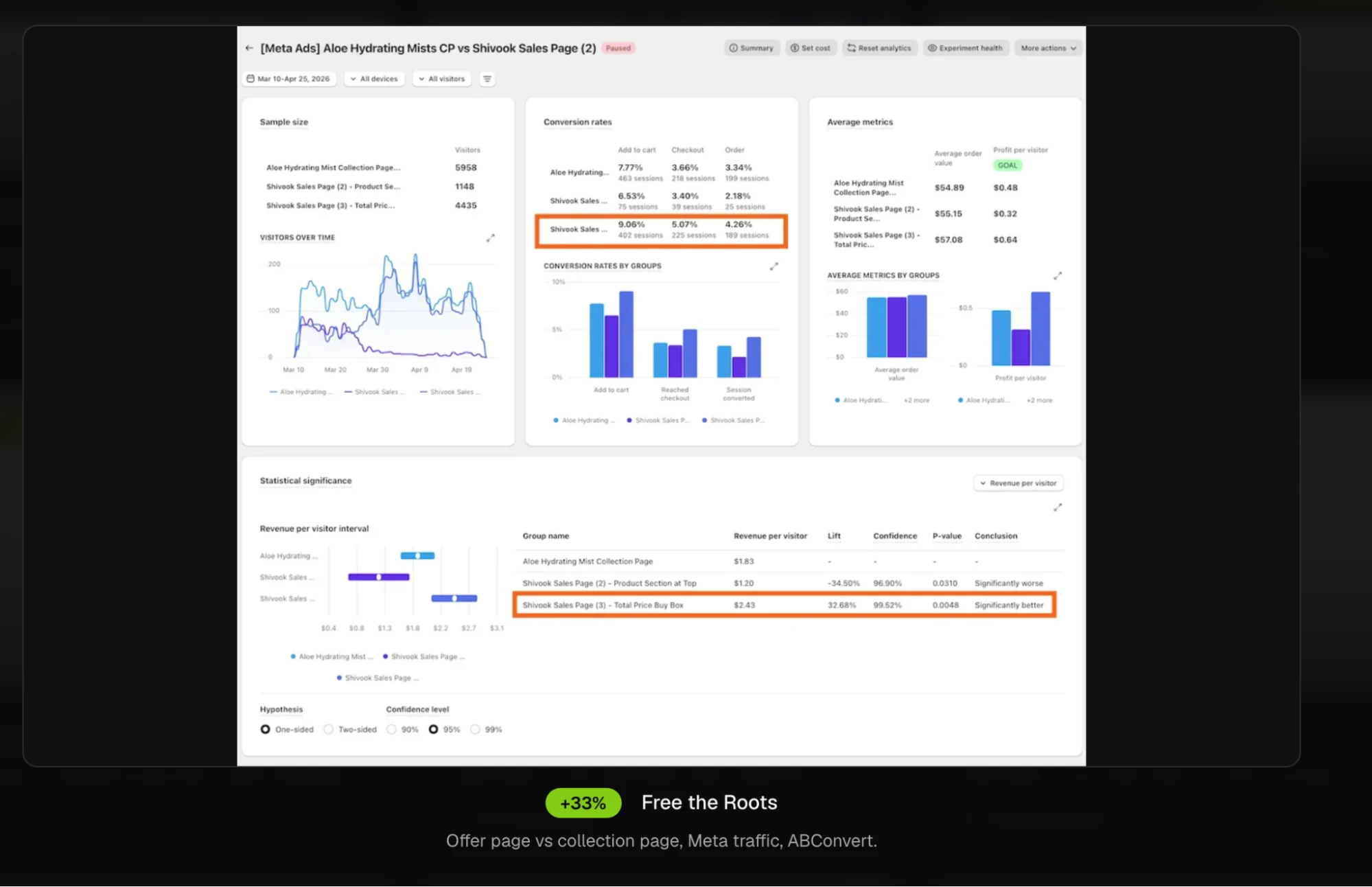
Shivook tested two sales-page variations for Free the Roots against their existing collection page for Meta Ads traffic. The winning version increased revenue per visitor by 33%, reaching $2.43 RPV at 99.52% confidence.
Pros
- Clear, productized starting offer: The $2,500 page rebuild includes the page and the A/B test.
- RPV-focused measurement: Shivook uses revenue per visitor rather than relying solely on conversion rate.
- Test results include context: Their published results show the tested pages, RPV, lift, traffic, and confidence level.
- Strong fit for paid traffic: Their positioning centers on improving the pages receiving acquisition traffic.
- Performance guarantee: The $2,500 offer includes a 10% RPV lift guarantee across up to five iterations.
Cons
- Narrower starting engagement: The $2,500 offer is centered on rebuilding and testing one page, so brands looking for broader CRO strategy, research, or site-wide optimization may need a larger engagement.
- Ongoing pricing is higher: The Growth Sprint starts at $7,500/month and requires a 90-day commitment.
- Best suited to brands with enough traffic to test: Their offer relies on controlled A/B testing on live traffic, so lower-volume stores may need longer testing periods.
02Apex CRO
Best for: Ecommerce brands looking for fully managed CRO, A/B testing, landing pages, and conversion-focused UX/UI and development, especially brands already spending meaningfully on acquisition.
Apex CRO is a full-service CRO agency that manages the process from data analysis and hypothesis development through A/B testing, UX/UI design, and development. Their services include conversion audits, landing page optimization, and custom website builds, with the team handling both strategy and implementation in-house.
The agency is designed for brands that want one team to handle both their CRO strategy and the technical work required to implement and test changes.
Cost: Undisclosed. Apex CRO directs prospective clients to a free strategy call to assess their goals before recommending the appropriate service.
Pros
- Hands-off for clients: Apex handles the CRO work from onboarding through implementation, so the internal team has less execution work.
- Free initial strategy call: Brands can discuss their current site, goals, and challenges before committing to a service.
- Custom-built implementation: The agency's websites and CRO work are built with clean, customizable code rather than relying on page builders or expensive apps.
Cons
- No public pricing: Speak with the agency to understand the cost and scope.
- Broad service offering: Brands looking specifically for a narrow landing-page testing program may need to clarify the scope of the engagement.
03Prosper Digital
Best for: Established Shopify/Shopify Plus brands that need research-led CRO alongside UX, development, migrations, or broader ecommerce transformation.
Prosper Digital is an Australian Shopify Plus agency that offers CRO, UX design, Shopify development, and ecommerce strategy. Their CRO work includes audits, data analysis, testing, user research, and ongoing optimization, with the same team responsible for designing and implementing the changes.
The agency supports A/B testing through tools including Shoplift, ABConvert, and Convert, and also offers server-side testing for Shopify Plus stores. This makes them a great fit for brands that need CRO alongside larger Shopify projects such as migrations, redesigns, and custom development.
Cost: Undisclosed. Prosper Digital offers both one-off CRO audits and ongoing CRO partnerships, with pricing proposed based on the engagement.
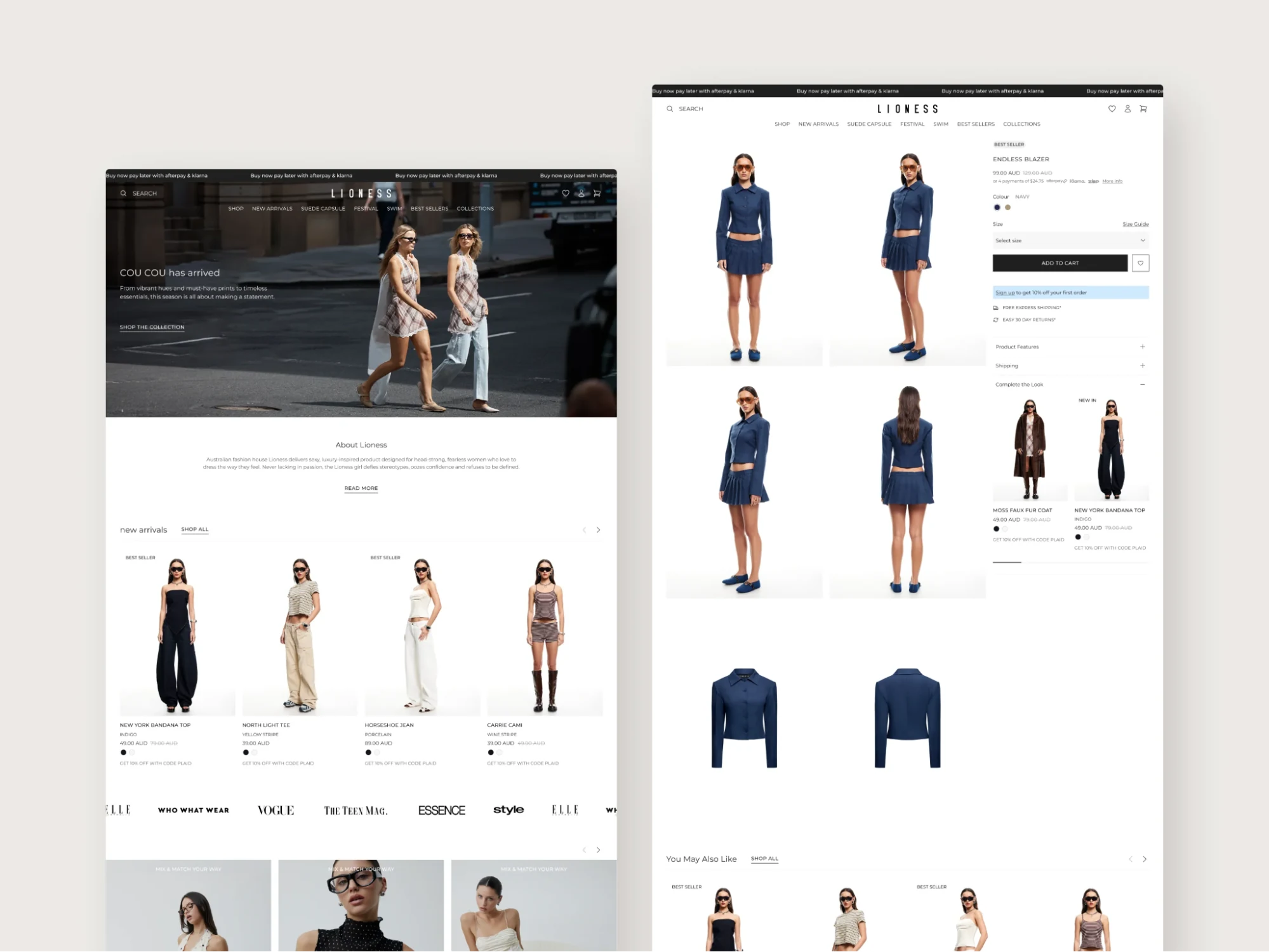
Lioness partnered with Prosper Digital to migrate from Shopify 1.0 to Shopify 2.0 while redesigning and optimizing the customer experience. Within six weeks of launch, the brand saw 113% higher sales, 130% more orders, and a 74% year-over-year increase in conversion rate.
Pros
- CRO audit option: Brands can start with a standalone audit before committing to ongoing optimization.
- Ongoing web optimization: The agency offers continuous research, testing, and iteration rather than limiting CRO to a single project.
- User research capabilities: Includes usability testing, customer interviews, surveys, and user journey mapping for online stores that need qualitative insights.
- Shopify Plus capabilities: Supports complex work such as checkout and cart optimization, server-side testing, migrations, and custom development.
Cons
- No public pricing: Costs need to be scoped directly with the agency.
- Broad service offering: Brands looking only for A/B testing may be paying for capabilities they do not need.
- Higher traffic requirements for testing: Prosper recommends around 10,000 monthly sessions for A/B testing; lower-traffic stores may need to rely more on user research and usability testing.
04ABxpert
Best for: Shopify Plus brands in the DACH market looking for highly data-driven CRO and A/B testing, particularly established ecommerce businesses with enough traffic to run meaningful tests.
ABxpert is a Germany-based CRO agency focused exclusively on Shopify Plus stores. Their process includes relying on Google Analytics 4 and Shopify Analytics with heatmaps, session recordings, customer surveys, reviews, support tickets, social media comments, and other customer research to develop and prioritize test hypotheses.
The agency reports 3,000+ completed A/B tests across 250+ shops, generating more than €150 million in additional revenue.
Their team handles hypothesis development, web design, development, QA, testing, and analysis, evaluating A/B tests against metrics such as conversion rate, average order value (AOV), revenue per user, profit, and return rate.
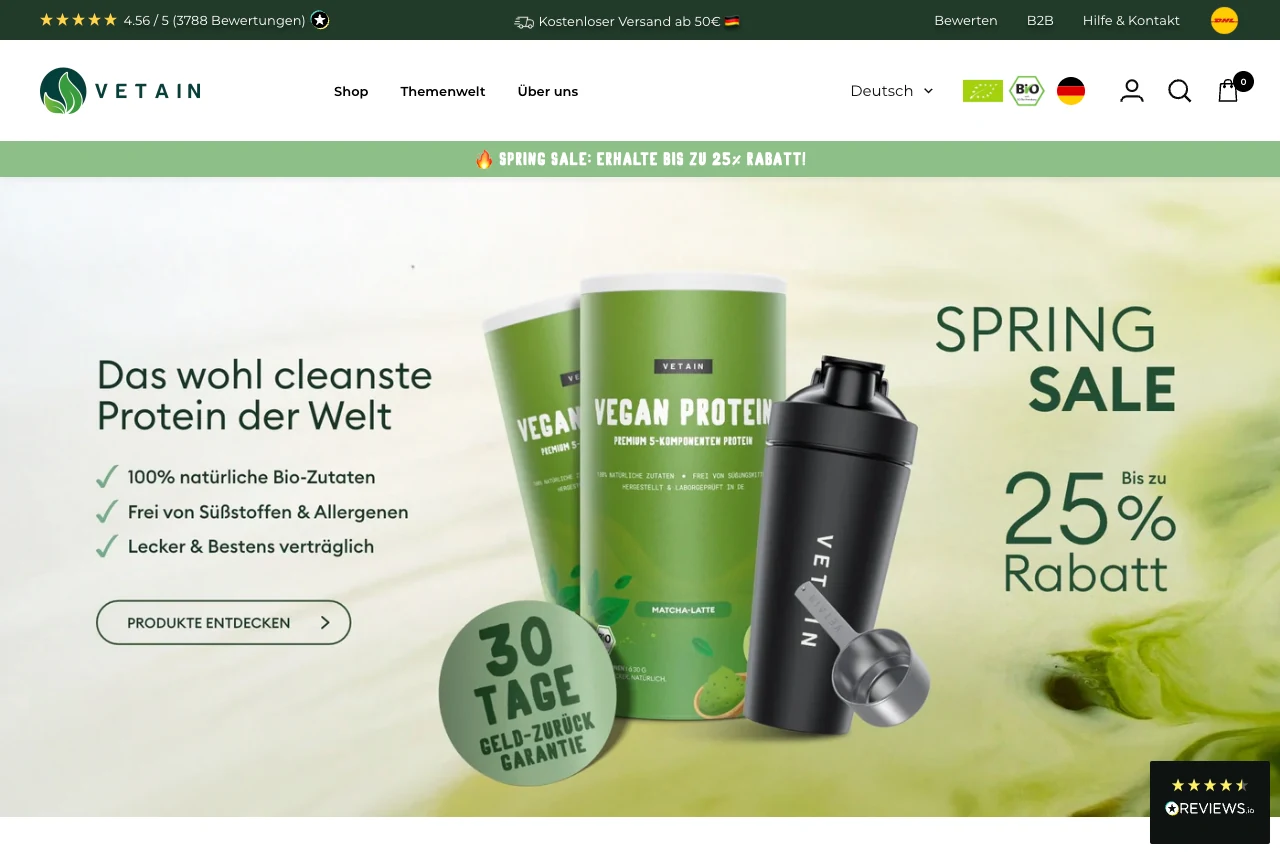
Cost: Selected services start at around $1,500. Full CRO engagement pricing is not publicly listed.
Pros
- Shopify Plus specialization: ABxpert focuses exclusively on Shopify Plus stores.
- Extensive research inputs: Their analysis includes customer reviews, support tickets, surveys, social media comments, and sales-team input alongside analytics.
- Structured testing process: Hypotheses are prioritized by expected impact, effort, and available evidence before development begins.
- In-house QA: Implementations go through two internal QA phases before an A/B test goes live.
- Knowledge transfer: ABxpert offers workshops to help ecommerce teams develop their own CRO and testing capabilities.
Cons
- Shopify Plus only: Brands on other ecommerce platforms are outside their stated specialization.
- Traffic requirements: Their model is heavily centered on A/B testing, so sufficient traffic is essential to run A/B tests and reach statistical significance.
05Glaze Digital
Best for: Growing DTC brands and established retailers looking for a Shopify-focused agency combining CRO, design/development, and retention marketing.
Glaze Digital is a Shopify Plus Partner based in Belfast that has built more than 250 Shopify stores since 2014. Their services include Shopify design and development, CRO, UX, retention marketing, and ongoing store support, with their CRO work covering the full customer journey from landing page through checkout.
Their Shopify CRO audit reviews 30+ conversion checkpoints, including navigation, collection and product pages, mobile experience, site speed, analytics, apps, trust signals, and checkout. They deliver their findings as a prioritized action plan, with a stated five-day turnaround from kickoff to report.
Cost: CRO services start at $250 on Shopify's Partner Directory. Full engagement pricing is not publicly listed.
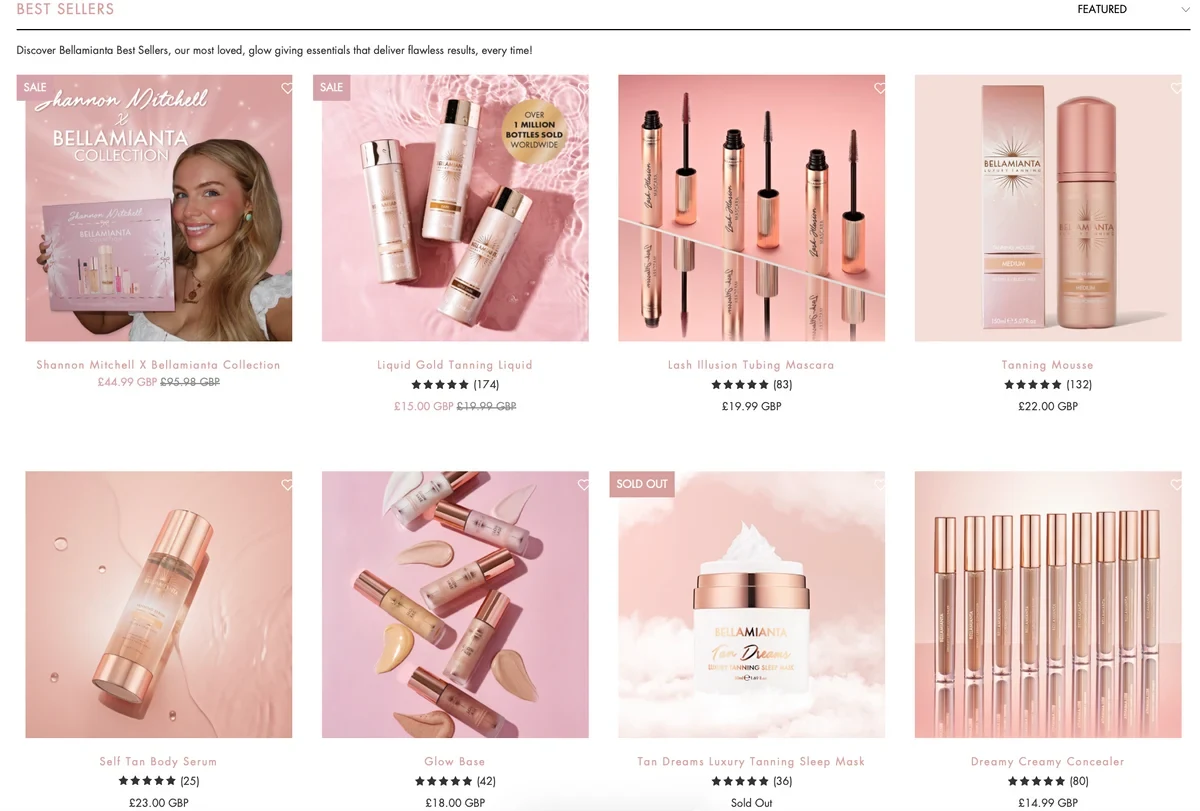
Glaze Digital rebuilt and optimized Bellamianta's Shopify Plus experience with CRO-led landing pages, speed improvements, custom checkout blocks, and Klaviyo integrations. The work resulted in a 400% increase in transactions, 34% higher traffic, 27% more checkouts started, and 12% fewer abandoned carts.
Pros
- Store-wide CRO audit: Reviews 30+ checkpoints across the customer journey rather than focusing on individual pages.
- Fast audit turnaround: Findings are delivered within five days and include a Loom walkthrough.
- Impact-based prioritization: Audit recommendations are ranked by expected impact versus effort.
- Retention expertise: CRO works alongside Klaviyo, email/SMS, and broader retention marketing capabilities.
- Accessible starting point: The publicly listed $250 starting price allows brands to begin with a smaller CRO engagement.
Cons
- Limited public testing data: The available case studies focus more on overall business outcomes than detailed A/B test results.
- Broad service offering: Brands looking specifically for a high-volume testing partner may need to clarify how much ongoing A/B testing is included.
- Full engagement pricing isn't public: The $250 starting price applies to selected services rather than establishing the cost of a broader CRO program.
06Scaling.co
Best for: Established Shopify/DTC brands doing $1 million or more per month with meaningful traffic, an internal marketing team or agency, and a need for a senior, end-to-end customer-growth operating system.
Scaling.co is a revenue optimization agency for established Shopify and DTC brands. They offer customer research, messaging, acquisition, on-site conversion, post-purchase optimization, and testing across the full customer journey.
Their 90-day program covers five areas: customer intelligence, message intelligence, acquisition-to-conversion optimization, post-purchase profit, and testing. Scaling.co works alongside existing media, retention, and development teams, with the founder involved in every account.
The agency limits the program to 12 active brands and targets Shopify/DTC businesses generating $1M+ per month with enough traffic to support reliable testing.
Cost: Engagements start at $10,000/month, with the final scope determined after a “Revenue Growth Assessment” based on traffic, catalog, existing team, and the components required.
Scaling.co rebuilt the offer structure and landing-page architecture for an 8-figure tech DTC brand based on different traffic segments, generating $4M in provable incremental revenue in 30 days.
Pros
- End-to-end execution: Scaling.co handles research, copywriting, design, development, QA, analytics, and testing rather than leaving implementation to the client's team.
- Revenue-focused measurement: The agency uses holdouts, controlled A/B tests, and cohort baselines to attribute incremental revenue.
- Founder involvement: The founder is involved in every account, with a maximum of 12 active installs.
- Works alongside existing teams: Scaling.co plugs into internal media buyers, retention teams, and developers rather than requiring brands to replace them.
- 90-day implementation model: The engagement has defined phases, outputs, owners, and testing milestones instead of an open-ended strategy engagement.
Cons
- High starting price: With a starting price of $10,000/month, the engagement may be out of reach for smaller CRO projects or one-off audits.
- Strict qualification: Scaling.co is designed for established brands with high-volume traffic and does not take on pre-launch or low-traffic stores.
- Not designed for isolated projects: They are not suited for brands that want a one-off landing page, audit, or individual test.
07ConversionWise
Best for: Ecommerce brands doing roughly £1M–£20M in annual revenue that want hands-on landing-page, funnel, and ongoing CRO optimization, particularly Shopify and Shopify Plus brands.
ConversionWise is a UK-based post-click growth agency focused on Shopify and Shopify Plus brands. Founded in 2013, they have worked with 4,000+ brands and built more than 7,500 conversion-focused pages.
Their work includes landing pages and funnels, product pages, offers, pricing, AOV, checkout, website redesigns, Shopify development, and ongoing CRO. The team uses a “Big Swing” approach, identifying the highest-impact opportunity first and building around it rather than maintaining a fixed testing queue.
Cost: Landing pages start at $2,000, while ongoing CRO starts at $3,000/month. Larger redesigns, funnel optimization, and development projects are scoped based on requirements.
G FUEL used ConversionWise to optimize their collection pages, product pages, and checkout, including faster add-to-cart, stronger PDP content, improved checkout trust, and AOV-focused changes. Their efforts generated $286,348 in additional monthly revenue.
Pros
- Clear post-click focus: Covers the journey from landing page through checkout rather than limiting work to individual CRO tests.
- Build-first option for lower traffic: Brands don't need large test samples to start improving their store.
- Proprietary testing data: ConversionWise also uses Optimo, their proprietary AI trained on 13 years of ecommerce data and page builds, to speed up research, identify patterns, and develop hypotheses.
- Fast execution: The agency commits to having something live within the first 10 days of an engagement.
- Works with existing teams: They collaborate with media buyers, retention teams, creatives, and internal marketers.
Cons
- Limited scope beyond post-click: ConversionWise focuses on the customer journey after the initial click, so brands looking for paid media or email marketing need separate support.
- Ongoing programs require a broader commitment: Brands looking for a single isolated test may find the wider growth model unnecessary.
08Simplistic
Best for: Established Shopify Plus brands that need ongoing CRO alongside premium ecommerce design, custom development, and lifecycle optimization.
Simplistic runs data-driven CRO programs for Shopify Plus brands, offering analytics, qualitative research, and structured testing. Their approach focuses on building an ongoing testing program rather than treating CRO as a one-off audit or redesign.
The agency offers CRO, Shopify management, and email & SMS within the same team, giving brands access to both storefront and retention services from the same team. Their process includes conversion audits, analytics infrastructure, user research, test prioritization, A/B testing, and ongoing site optimization.
Cost: Services start from $10,000 based on selected services and third-party listings. Full CRO program pricing is quote-based and depends on scope.
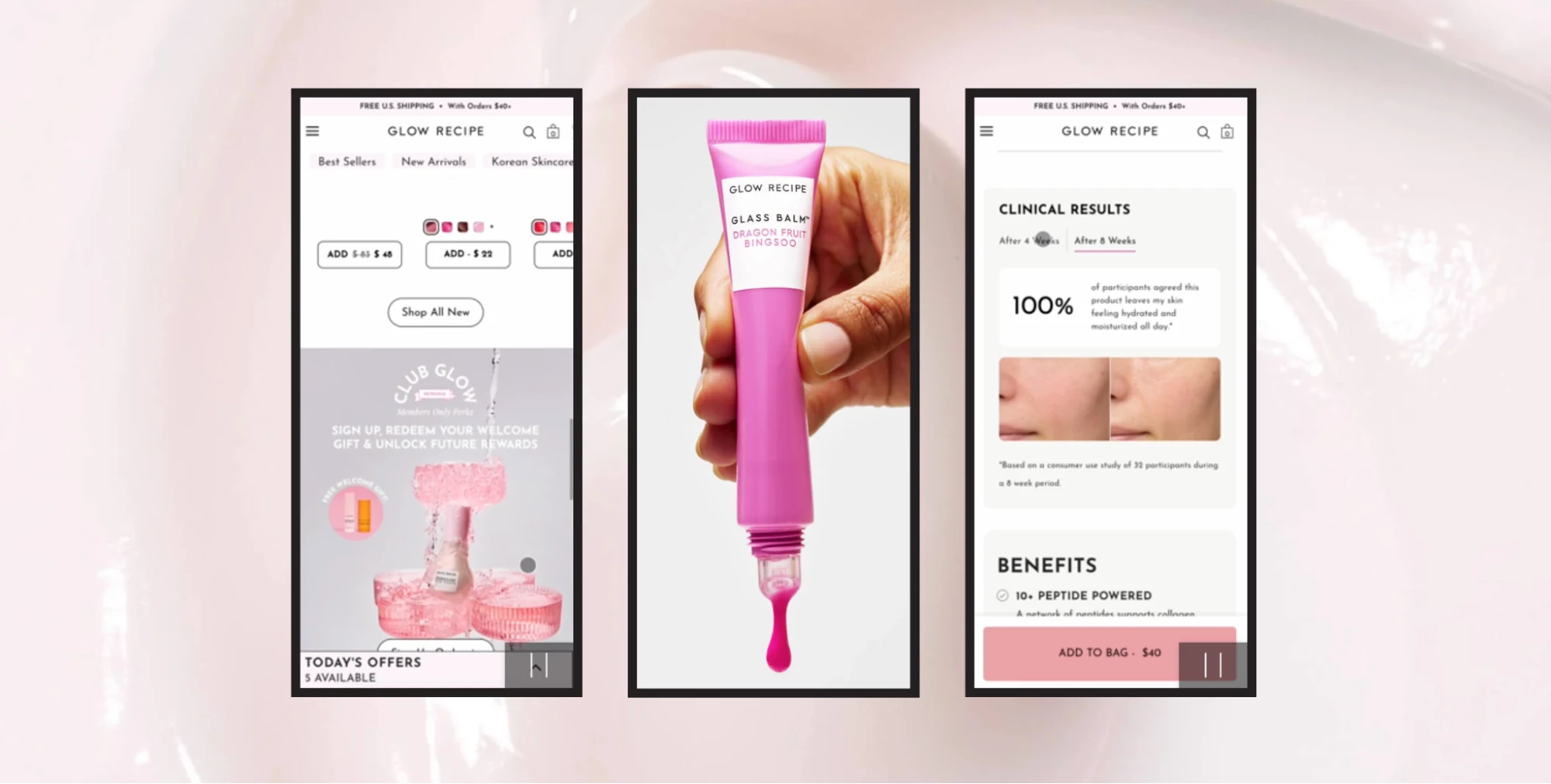
Glow Recipe used Simplistic to build a structured CRO program around mobile UX gaps, a low-performing Kit Builder, and the lack of an established testing cadence. The agency introduced device-specific testing, redesigned the Kit Builder, and ran ongoing tests.
From Q1 2025 to Q1 2026, Glow Recipe saw a 10% average monthly increase in CVR and a 16% conversion-rate lift during peak season.
Pros
- Full-funnel scope: The team can connect on-site CRO with email & SMS, giving them visibility into what happens after the initial purchase.
- Structured testing cadence: Their ongoing program creates a repeatable process for prioritizing, running, and learning from tests.
- Revenue-focused reporting: The team reports test impact in terms of revenue rather than only test wins.
- Flexible approach to lower traffic: The agency can still deliver value through audits, analytics, and qualitative research when traffic levels make frequent A/B testing impractical.
Cons
- Shopify Plus only: Brands on other ecommerce platforms can’t use their CRO program directly.
- Higher starting cost: The $10,000 starting point makes it a larger commitment than smaller CRO projects.
- Ongoing-program model: Their approach is built around continuous website optimization rather than isolated A/B tests or one-off audits.
09Fuel Made
Best for: Established DTC brands doing $10M–$100M+ annually that want a senior-level Shopify/CRO partner, particularly brands that have hit a growth plateau.
Fuel Made is a senior-level Shopify and CRO agency that specializes in improving conversion rate, average order value, and customer lifetime value. They approach their CRO projects in 2 ways:
- A one-time audit with data-backed recommendations, designed mockups, and a roadmap
- An ongoing retainer covering strategy, design, development, testing, and implementation.
Their ongoing program uses continuous A/B testing to identify opportunities across the conversion funnel, starting with areas such as the homepage, collection pages, product pages, cart, and navigation. Fuel Made also provides Shopify design and development as well as Klaviyo Email & SMS marketing, allowing brands to work with the same team across their storefront and retention channels.
Cost: CRO audits start at $3,000, while ongoing CRO retainers typically start around $7,500/month. One-off landing pages start at $3,000.
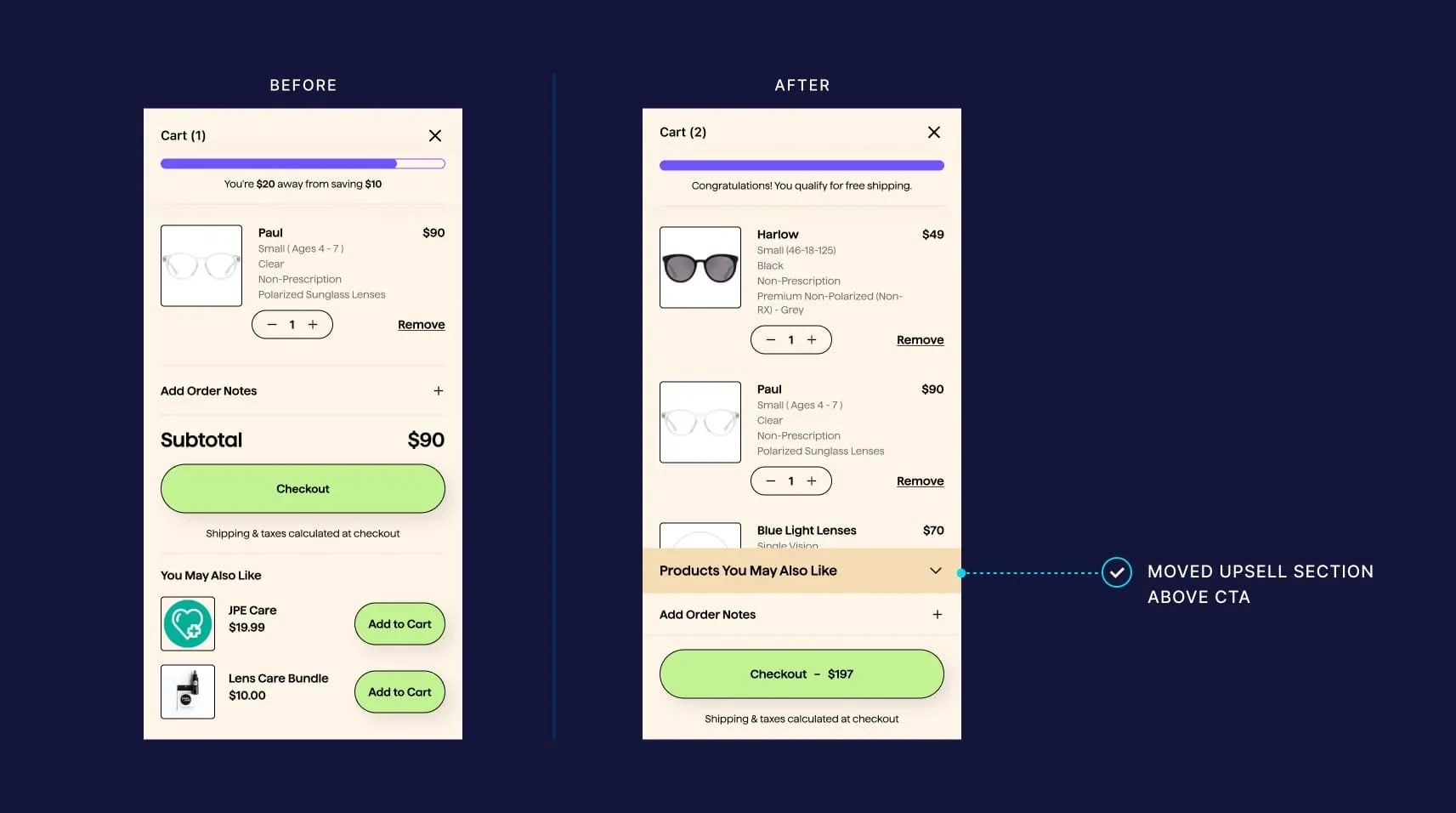
Fuel Made tested moving Jonas Paul's mobile upsell section above the checkout CTA and placing the products inside an accordion to reduce friction. The variant increased conversion rate by 8% and revenue per visit by 19%, and also increased AOV.
Pros
- Audit-to-implementation option: Brands can start with a focused CRO audit or move into a retainer where Fuel Made handles implementation and testing.
- Focus on multiple revenue levers: The program evaluates CVR, AOV, and LTV rather than treating conversion rate as the only outcome.
- Works within existing brand systems: CRO recommendations generally improve UX and flow without requiring a complete visual redesign.
- Clear funnel coverage: The team identifies priority opportunities across home, collection, product, cart, navigation, and landing pages.
- Long-term engagement model: Fuel Made reports that many clients have stayed with the agency for 8+ years.
Cons
- Higher cost of entry: The pricing is geared toward established ecommerce brands rather than smaller stores.
- Audit implementation is usually handed off: For one-time audits, Fuel Made typically provides recommendations and assets for the client's developers rather than implementing the changes itself.
10Jolly Commerce
Best for: High-growth Shopify brands doing roughly €2M–€80M that want rigorous, ongoing CRO focused on revenue, including pricing, offers, landing pages, funnels, and checkout.
Jolly Commerce is a CRO-focused Shopify agency that works with established DTC brands on ongoing testing. Their team handles strategy, design, and development in-house, with no handoffs.
The agency uses GA data, heatmaps, reviews, and customer behavior to identify high-leverage opportunities across pricing, offers, product and collection pages, mobile navigation, cart, and checkout. Their testing program typically runs 1–3 tests per sprint, with winning tests implemented as soon as results are confirmed.
Cost: Undisclosed. Jolly Commerce does not publish their CRO engagement or retainer pricing.
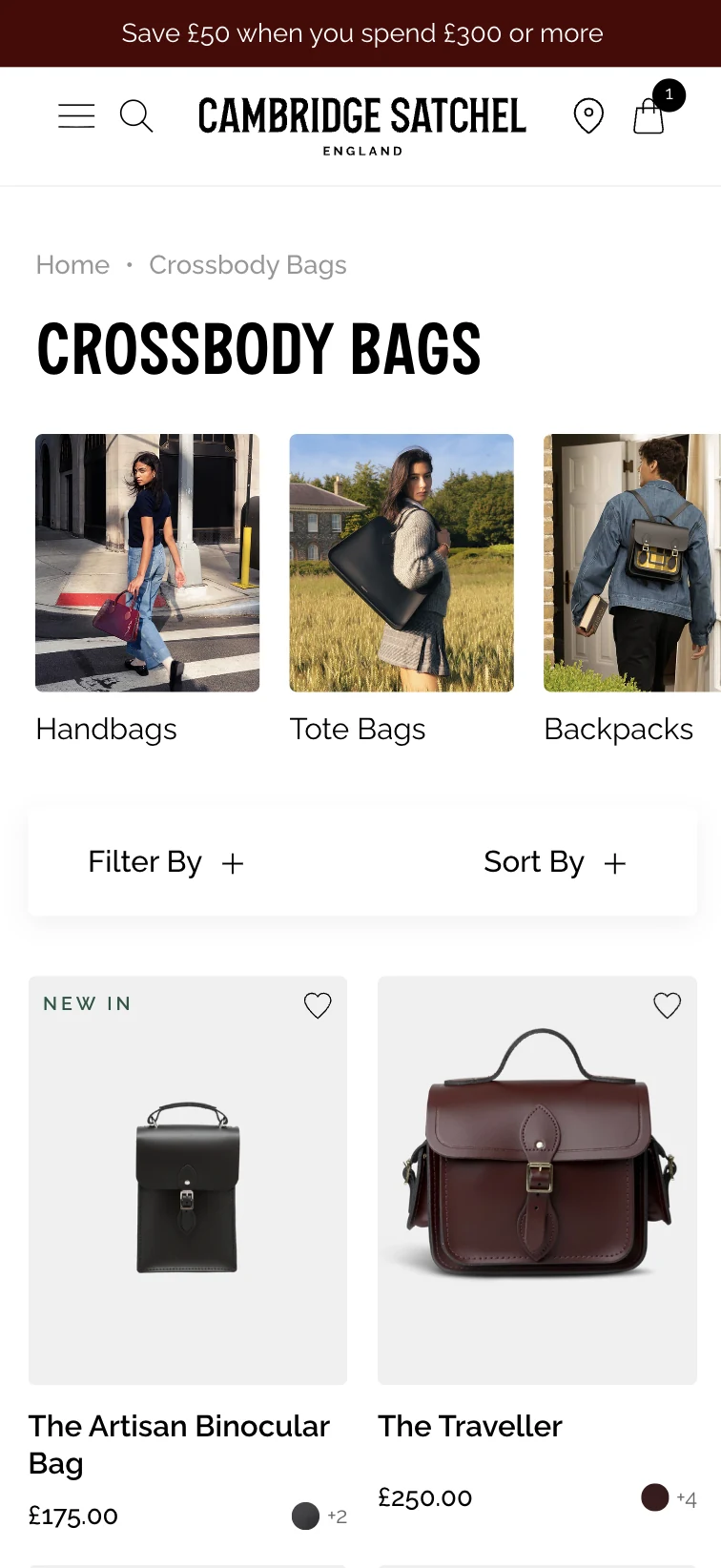
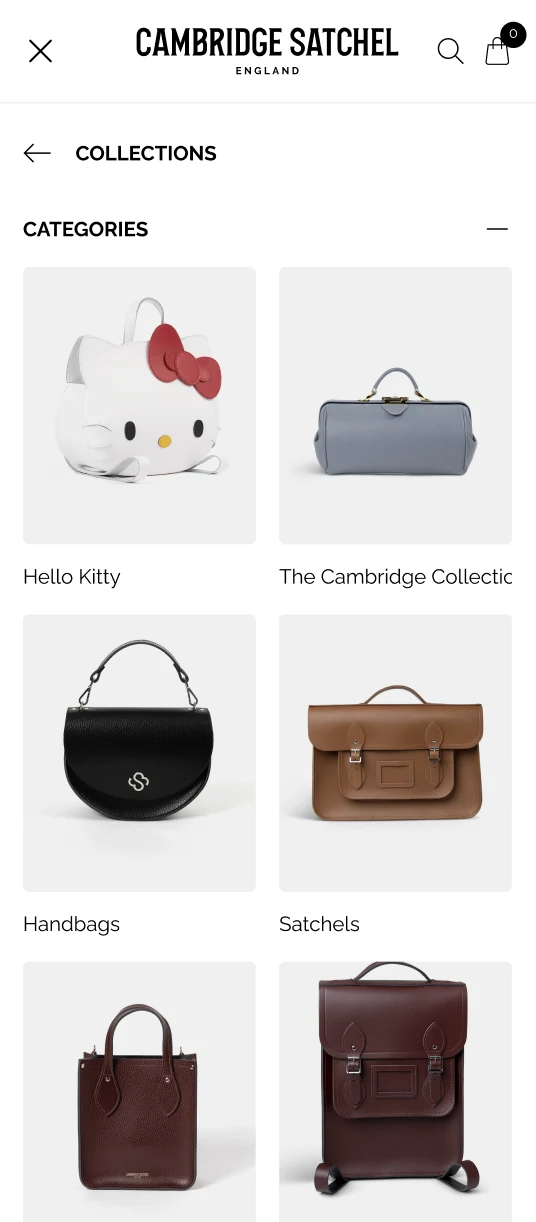
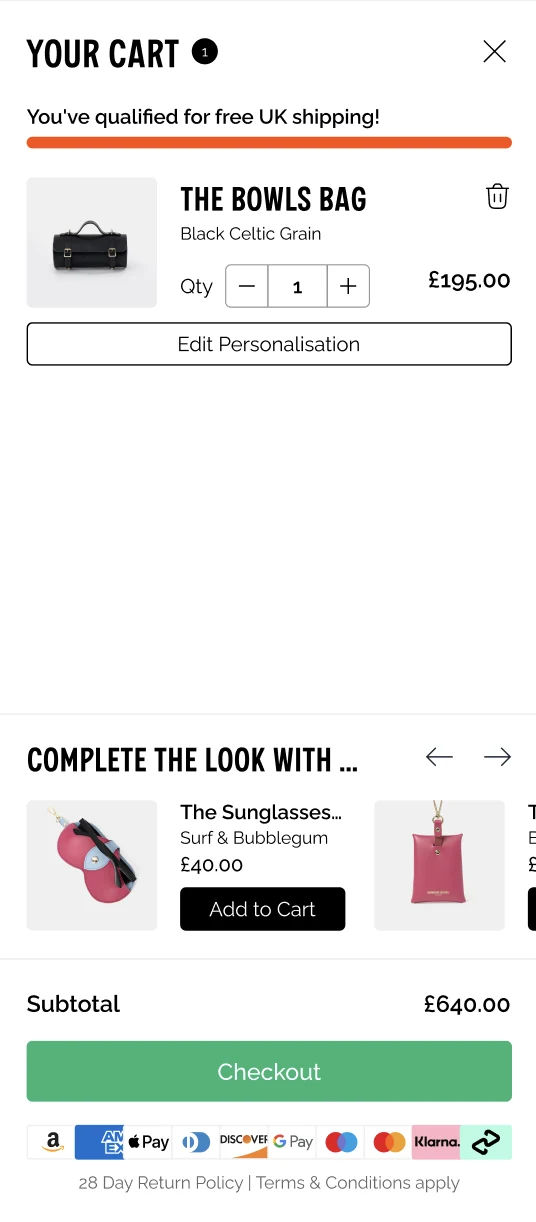
Jolly Commerce ran a six-month CRO retainer for Cambridge Satchel with 13 A/B tests across collection pages, mobile navigation, and the cart. The tests included visual subcategory navigation on collection pages, a redesigned mobile menu, and a cart with free-shipping progress and product recommendations.
The program generated a 67% increase in revenue per visitor against baseline, with the same traffic and ad spend.
Pros
- Detailed test reporting: You can see the hypothesis, change, test duration, traffic split, and performance metrics behind individual tests.
- Commercial testing focus: You can test pricing, offers, bundles, and merchandising alongside standard UX changes.
- Brand-conscious testing: You keep your existing brand standards while Jolly develops and tests new user experiences.
- Long-term partnership: The agency reports 4+ years of average client retention, giving you an option for sustained testing rather than short-term project work.
Cons
- Pricing is not transparent: Brands need to contact Jolly Commerce to learn about engagement costs and minimum commitments.
- Narrow platform focus: Jolly Commerce’s CRO program is limited to Shopify stores.
- Ongoing engagement model: They focus on continuous testing rather than one-off CRO projects.
11How to evaluate and pick the right CRO agency
The agency you choose should match the problems you need to solve, the scale of your ecommerce operation, and the resources you already have in-house. A landing-page specialist will approach the engagement differently from an agency running a broader testing program across your storefront.
Use the following criteria to compare agencies before signing a contract.
1. Start with your CRO needs
Start by defining the work you need the agency to handle. That could be:
- CRO strategy and UX research
- A/B testing and test planning
- Landing pages and funnels
- UX/UI and site redesign
- Shopify development and implementation
- Analytics and measurement
- Ongoing optimization
Then decide whether you need a one-off project or an ongoing CRO program. Shortlist agencies that offer the specific services you need rather than agencies with a broader service list.
2. Check whether they work with brands like yours
Check the agency’s experience against your:
- Brand size and revenue
- Monthly traffic and order volume
- Ecommerce platform
- Product category
- Geographic markets
- Paid-traffic mix
- Business model
For example, an agency that primarily works with high-volume Shopify Plus brands may have a different process and engagement model from one serving smaller ecommerce businesses.
Look for case studies involving brands with similar traffic levels, business models, and CRO needs to make sure the agency’s experience aligns with yours.
3. Look beyond headline results in their case studies
A case study should give you enough information to understand what produced the reported result. When evaluating an agency’s case studies, check:
- What was tested?
- Which metric was used?
- How much traffic did the test receive?
- How long did it run?
- Was the result statistically significant?
- Did the result hold after implementation?
A “30% increase in conversions” is only useful when you can see what was tested, how much traffic it received, how long the test ran, and whether the result was statistically significant.
4. Understand how they approach CRO
Ask the agency to explain how they decide what to test and why. Specifically, ask:
- What research and data do they review before proposing tests?
- How do they turn customer behavior into test hypotheses?
- How do they prioritize tests?
- What types of changes do they typically test?
- When do they use controlled A/B tests?
Ask them to walk you through a recent test from research and hypothesis through implementation, analysis, and iteration. This gives you a concrete view of how the team works.
5. Ask how they measure success
Ask which CRO metrics the agency uses to evaluate their work. Depending on your business model and test, these could include:
- Revenue per visitor
- Average order value
- Conversion rate
- Revenue
- Contribution margin
Ask how the agency accounts for other changes happening during the same period. For example, if a test runs while you change your paid-media mix or launch a major promotion, find out how those factors are accounted for in the analysis.
6. Evaluate what you'll actually get from the team
The people delivering the work matter as much as the agency’s process. Before signing, clarify:
- Who will work on your account?
- Will you have dedicated strategists, designers, and developers?
- How senior is the delivery team?
- Who owns implementation?
- How often will you communicate?
- How many tests or projects does the team typically run each month?
- Will the people who sell the proposal remain involved during delivery?
This also helps you identify whether the quoted scope is realistic for the team assigned to your account.
7. Compare the engagement model and cost
CRO agencies package their services differently. You could be paying for a one-off audit, individual tests, landing-page builds, a monthly retainer, or a broader ecommerce growth engagement.
Compare the scope attached to the price rather than comparing monthly fees alone. Check the contract for:
- Minimum commitment
- Setup fees
- Development costs
- Testing-tool costs
- Additional design or development hours
- Cancellation terms
A lower monthly fee can cover a very different scope of work than a higher one, so compare what each engagement actually includes before comparing prices.
8. Make sure they can work with your existing stack
Confirm that the agency can work within your current technical setup. Check compatibility with your:
- Ecommerce platform
- A/B and multivariate testing platform
- Analytics tools
- CRM and email platform
- Product and review tools
- Development workflow
Clarify what access the agency needs and which implementation tasks your team will handle, especially for tests that require changes across your tech stack.
9. Talk to previous clients
Ask the agency for references from brands with a similar size, business model, or CRO scope. Use those conversations to understand:
- Did the agency deliver what it promised?
- Were recommendations actually implemented?
- How was communication?
- Did the agency challenge assumptions when necessary?
- Were results sustained after implementation?
- Would the client hire the agency again?
A reference call can also reveal how the agency handles delays, disagreements, and implementation issues once the engagement is underway.
10. Choose based on fit, not the biggest promise
Use the requirements you defined at the start to build your shortlist. Compare agencies on:
- Relevant experience
- CRO methodology
- Testing capabilities
- Implementation support
- Team quality
- Reporting
- Engagement model
- Cost
When comparing case studies, focus on whether the agency has solved problems similar to yours and whether their scope, process, and team match what you need. A large percentage lift alone doesn't tell you whether the same approach fits your business.
12Choose a CRO partner that fits your goals
The agency you choose should match the problems you need to solve, the way your team works, and the level of testing you want to run. Use the criteria above to compare these leading ecommerce CRO agencies on their experience, testing process, team, scope, and cost.
Once you’ve chosen an agency, your testing setup needs to support the work they’re doing.
ABConvert gives CRO teams the infrastructure to build, launch, and measure A/B tests on Shopify, without relying on developers to implement every test. Your team can test changes across pages, themes, templates, pricing, shipping, offers, and checkout, and measure their impact from one powerful platform.
See how ABConvert fits your CRO workflow
Build, launch, and measure A/B tests on Shopify without relying on developers.
Book a demo →