· 6 min read
A shorter path to checkout sounds like an obvious improvement. For Happy Staffy Co., the question was more specific: what happens when shoppers who usually buy several items skip the cart?
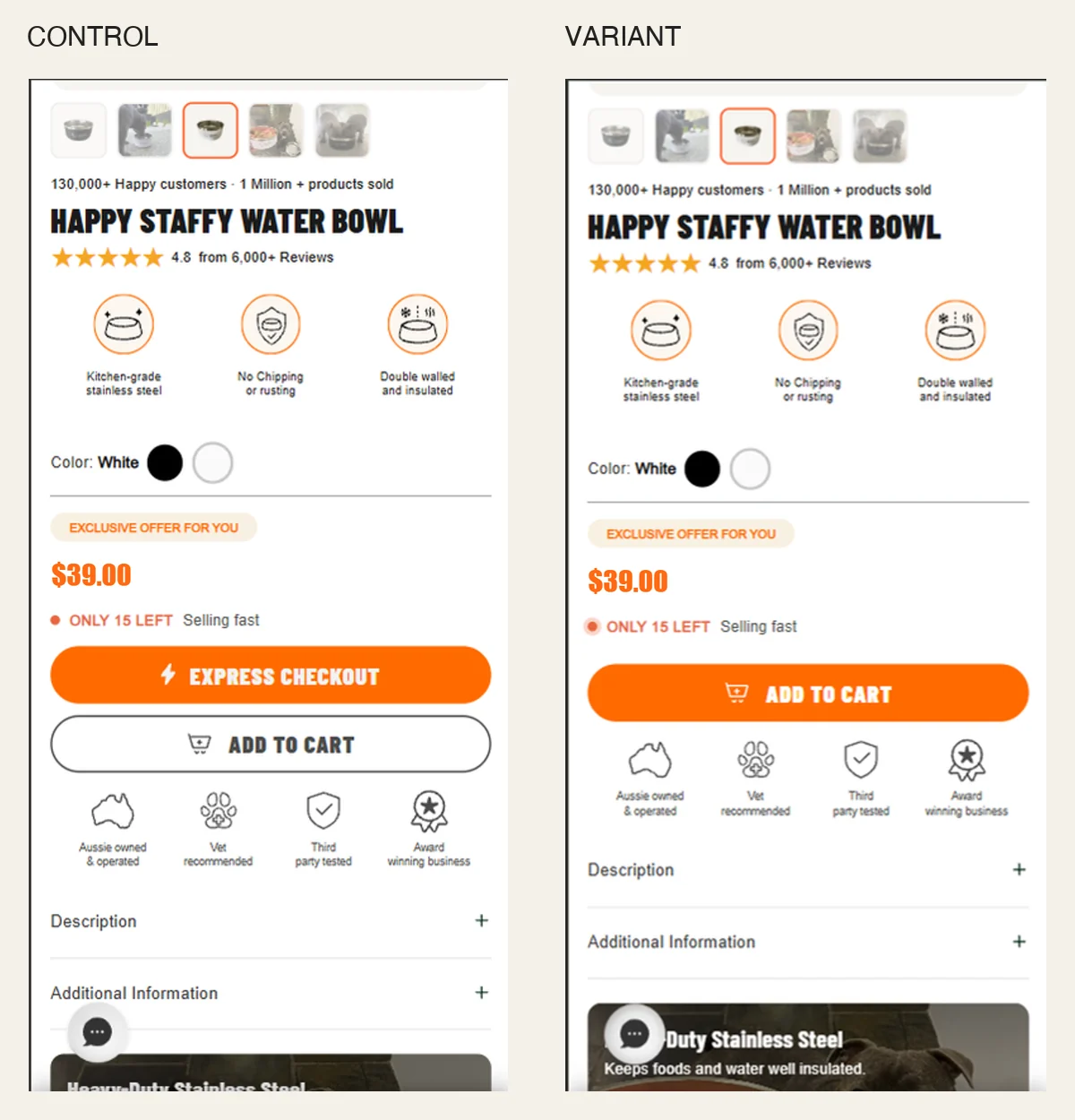
Working with CRO agency GrowthLayer, the pet brand tested removing Express Checkout from its US product pages. The variant kept Add to Cart as the route forward. In that test, conversion rate was 23.01% higher, revenue per visitor was 45.23% higher, and average order value was 18.97% higher than the control.
It was one part of a wider program using ABConvert to test product recommendations, cart messaging and promotion deadlines across Happy Staffy Co.'s Australian and US stores.
01About the Brand and Its CRO Partner
Happy Staffy Co. is an Australian dog brand selling tough toys, orthopedic beds and treats for strong chewers. It operates separate Shopify stores in Australia and the United States.
GrowthLayer ran the testing program: analyzing shopper behavior, developing hypotheses, designing changes, launching tests in ABConvert and reviewing the results.
02The Challenge
The team's brief reported that 94% of product page sessions ended without an add-to-cart action. The opportunity was to help more of those visitors move toward an order and make relevant additions along the way.
The team focused on two questions:
- Could complementary products on the product page increase order value?
- Could changes to the product page and cart help more shoppers complete checkout?
Instead of assuming the same change would work everywhere, the team tested its Australian and US stores separately.
03Five Tests Across Product Pages and the Cart
Here are the results from five product page and cart tests across the Australian and US stores. Each result compares the variant with its control.
| Test | Market | Conversion rate | Revenue per visitor | Average order value |
|---|---|---|---|---|
| Three-item product page upsell | Australia | +18.21% | +22.66% | +4.21% |
| Cart reservation timer | United States | +19.16% | +16.71% | +0.56% |
| Express Checkout removal | United States | +23.01% | +45.23% | +18.97% |
| Fall Sale countdown | United States | +12.96% | +21.28% | +7.36% |
| Product page countdown | Australia | +7.95% | +13.75% | +4.89% |
1. Put Complementary Products Near the Buying Decision
On the Australian store, the team added a three-item checkbox upsell below the product benefits. The brief noted that 43% of bundle buyers already added an individual toy themselves. The hypothesis was that showing relevant treats and toys at that point would help more shoppers build a larger order.
The variant included an extra 10% discount on the suggested additions. It reported +22.66% revenue per visitor, alongside +18.21% conversion rate and +4.21% average order value.
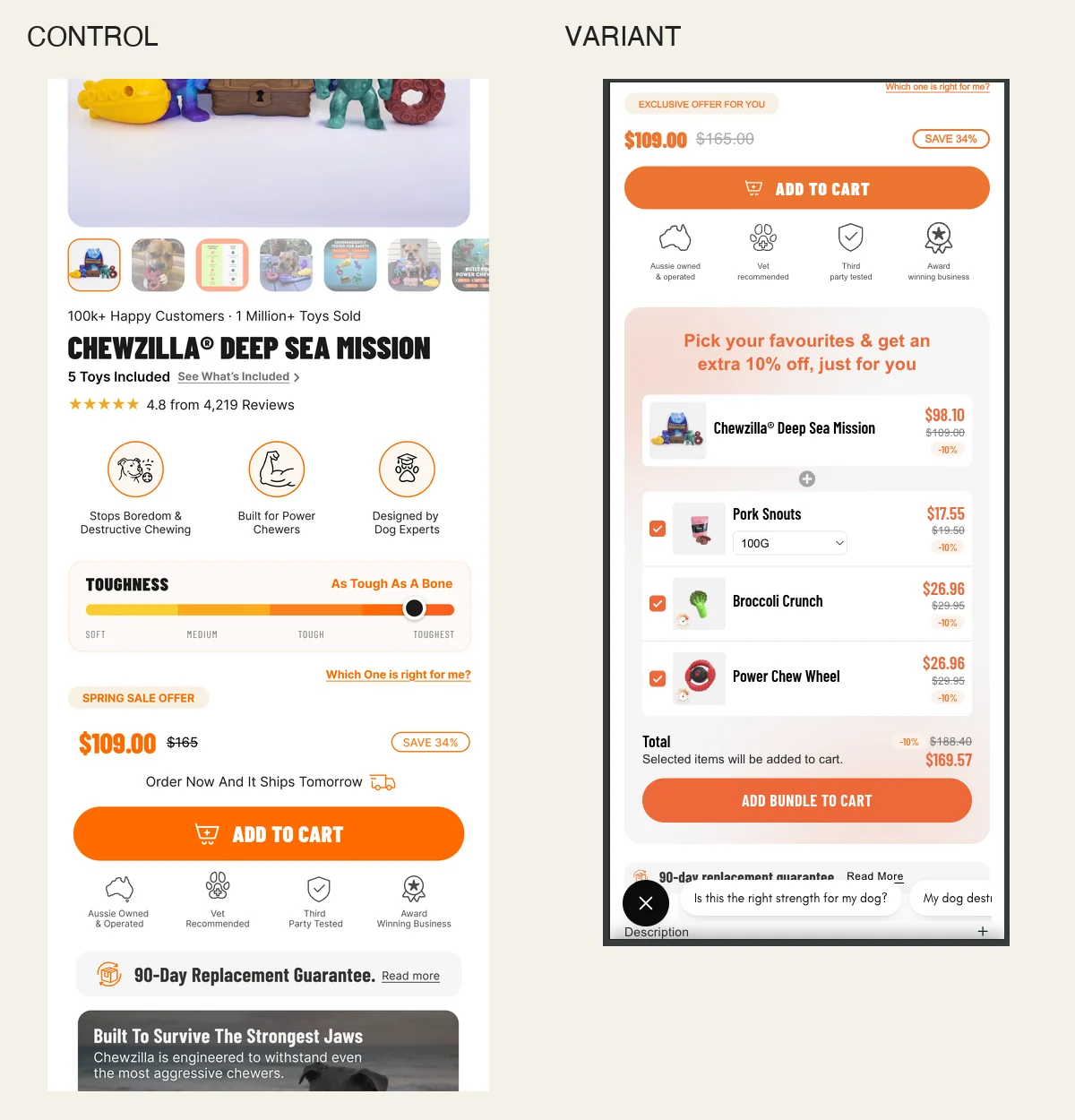
After rolling the upsell out to all traffic, the team estimated an additional A$55,000 in monthly revenue from the change.
2. Test the Cart's Final Prompt
On the US store, the team tested a 10-minute timer above the checkout button with messaging that items were reserved. The question was whether a time-sensitive prompt would help shoppers who already had products in their cart finish their order.
The reported result was +19.16% conversion rate, +16.71% revenue per visitor and +0.56% average order value. Order value changed little, so the team focused on checkout completion when interpreting the result.
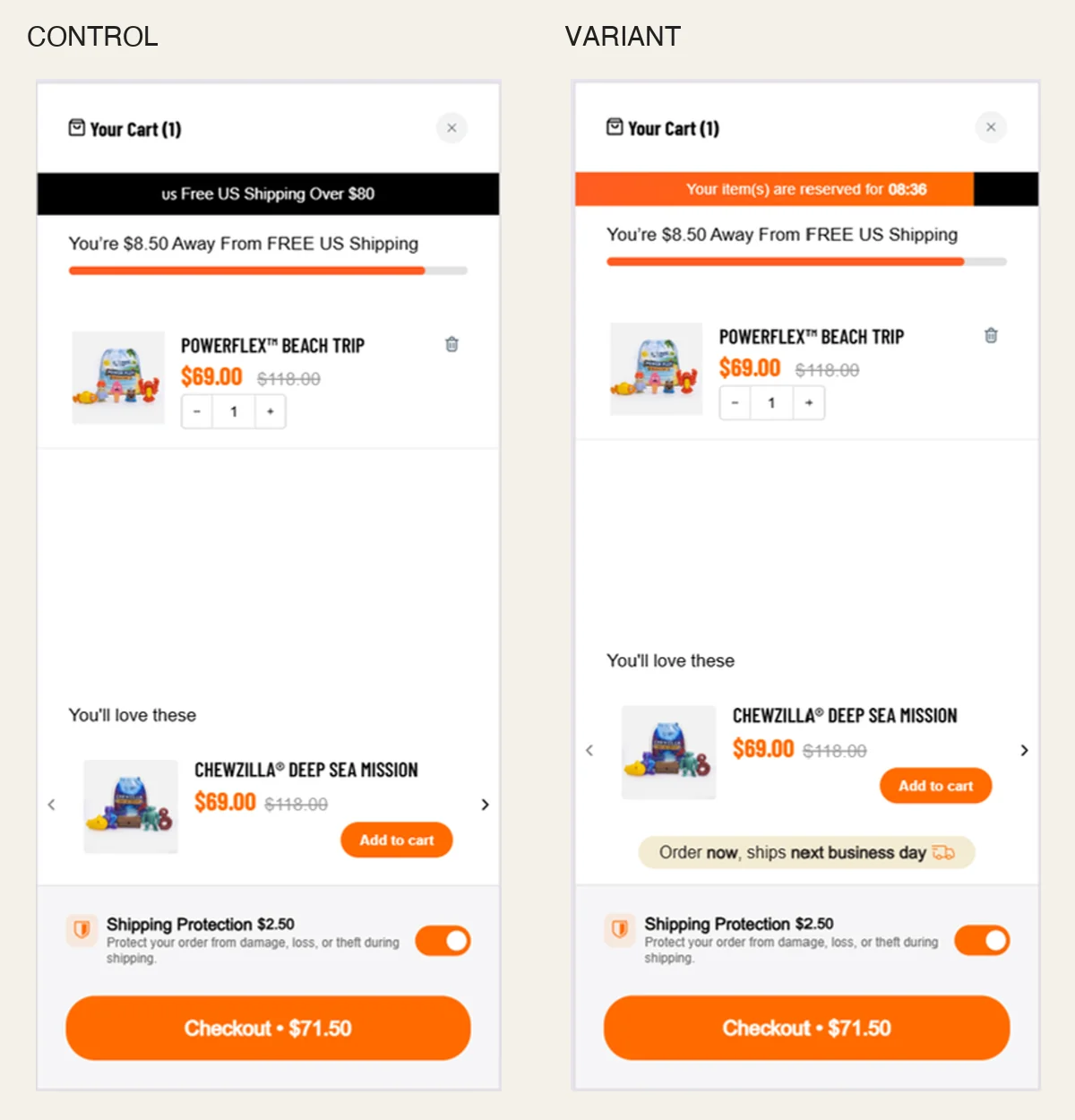
The brief reports that this change won in the US but did not win in Australia. It is a useful reason to validate a change in each market before rolling it out broadly.
3. Let Shoppers Build an Order Before Checkout
Happy Staffy Co. customers often buy several items together. GrowthLayer's hypothesis was that Express Checkout could move shoppers past the cart before they finished building their order.
The US variant removed Express Checkout from the product page and retained Add to Cart. The reported lifts were +23.01% conversion rate, +45.23% revenue per visitor and +18.97% average order value.
Those results supported the team's decision to give the cart a larger role in the purchase journey. The brief also reports a separate Australian test with +11.30% conversion rate.
4. Make a Promotion's Deadline Clear
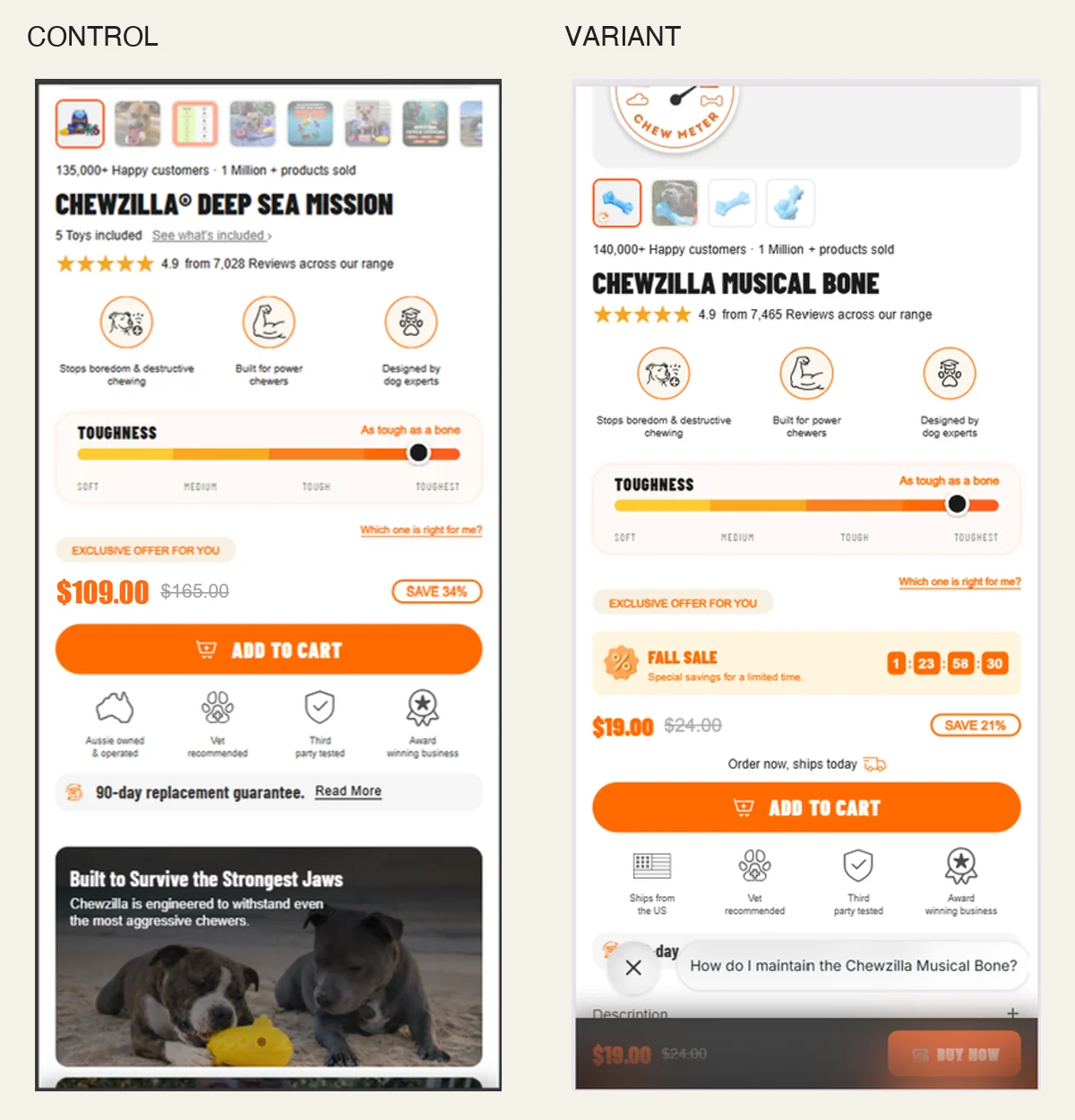
For the US Fall Sale, the team placed a sale banner and countdown near the product price. The hypothesis was that a visible promotion deadline could help shoppers decide while they were considering the offer.
The test reported +12.96% conversion rate, +21.28% revenue per visitor and +7.36% average order value.
5. Validate the Offer Message in Australia
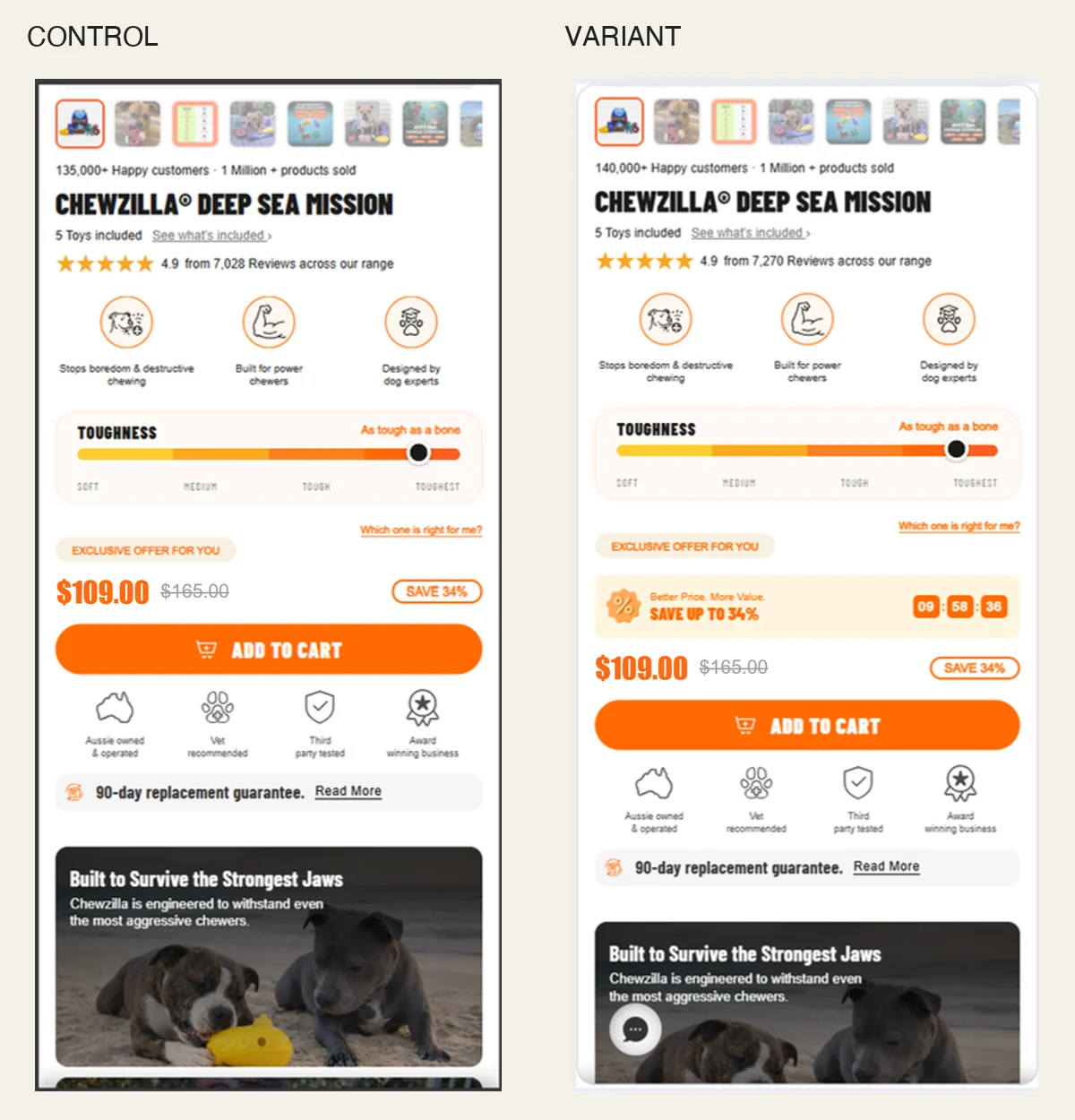
In a separate Australian test, the team added a countdown to the sale-price offer on the product page. That test reported +7.95% conversion rate, +13.75% revenue per visitor and +4.89% average order value.
04What Other Merchants Can Learn
- Test the path your customers actually take. A one-item purchase and a basket of complementary products may need different routes to checkout.
- Look at revenue per visitor alongside conversion and order value. More completed orders and larger baskets answer different questions.
- Treat an upsell as an offer. Placement, product selection and discount can all change together. Follow-up tests can help isolate which part matters.
- Keep urgency accurate. A timer should communicate a real deadline or reservation policy. The message must remain true when the countdown ends.
- Validate each market. A US result is a useful hypothesis for Australia, rather than a substitute for testing there.
05Test Your Own Path to Purchase
Start with one decision: the purchase buttons on a product page, an upsell offer or the message next to checkout. Compare it with your current storefront before making a permanent change.
Explore template tests or URL redirect tests for your own storefront. For another example of testing across the buying journey, read Kookgigant's case study.
Want a team to run the program with you? Talk to GrowthLayer.
 More stories